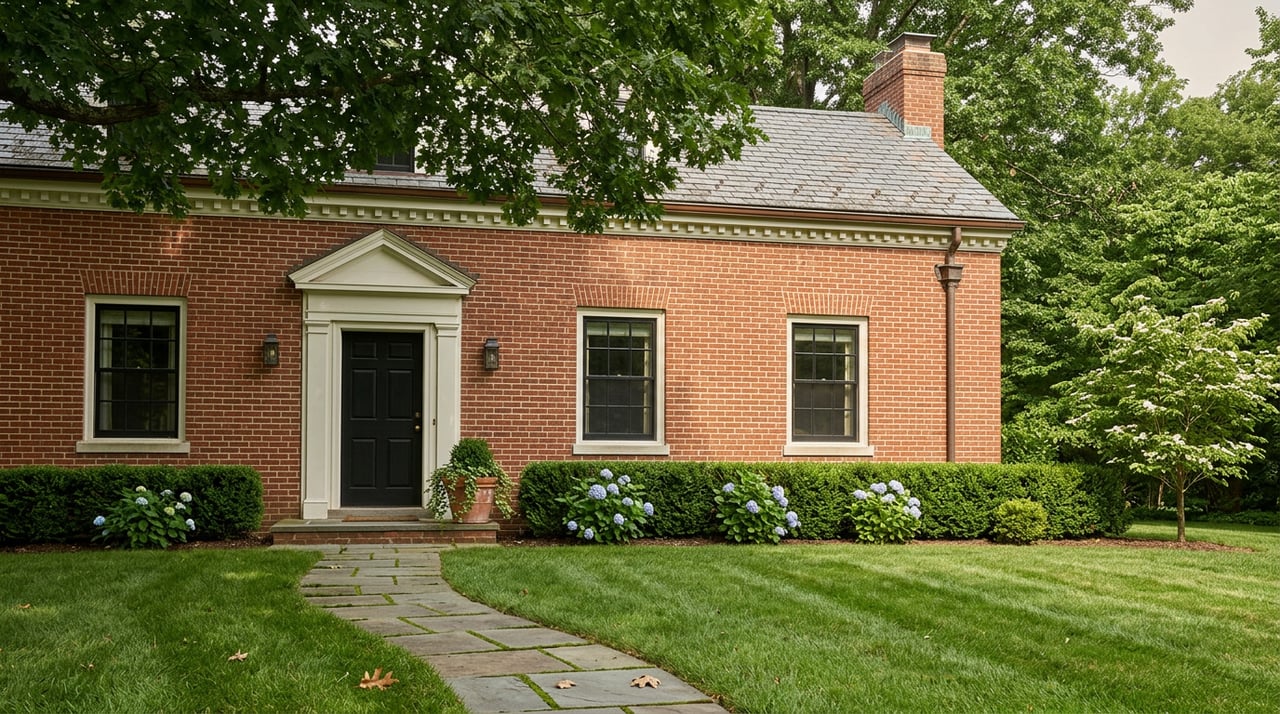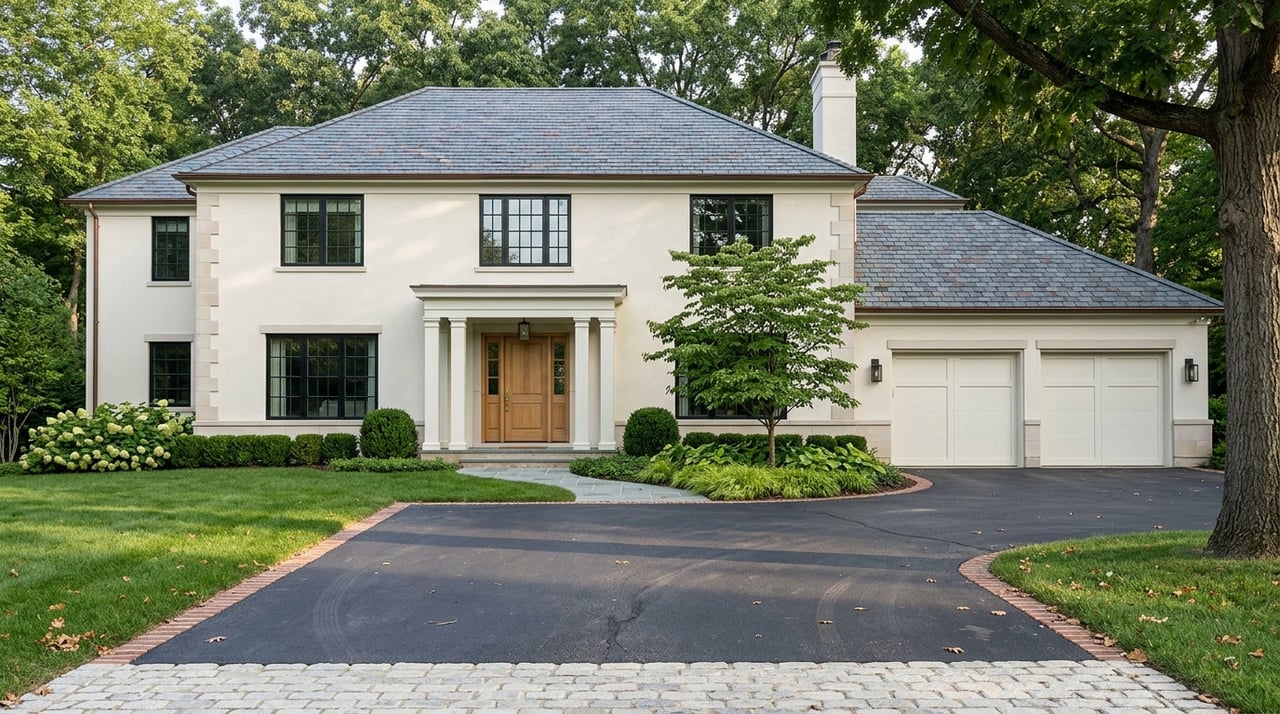
Picture two buyers making offers on nearly identical wooded acre lots in Potomac the same week, same price range, same builder-ready shape. One is financing with an FHA loan. The other is financing conventionally. The FHA buyer's lender will require a well flow test and a septic inspection as a matter of course. The conventional buyer's lender likely will not require either unless an appraiser flags a specific concern. Same road, same acreage, same asking price, and a meaningfully different path to the closing table, driven entirely by a variable that never shows up in a listing headline: how the property gets its water and where its wastewater goes.
That variable is the real story behind Potomac's market this year, and it matters more than the median price most buyers fixate on before they ever call an agent.
Why the median splits into two numbers
Ask two different sources what a home in Potomac costs right now and you will get two different answers, and the gap is not a rounding error. As of mid-2026, Zillow put the average home value in Potomac at roughly $1,343,700, up 1.2 percent from a year earlier, with homes typically going under contract in about 23 days. Over the same general window, Homes.com's trailing twelve-month figures showed a median sale price closer to $1,250,000, down 6 percent from the prior twelve months, with homes selling in about 27 days against a national average of 53.
Both figures are plausible. Both come from real closed transactions. The disagreement exists because Potomac is not one housing market wearing one zip code. It is at least two: a cluster of subdivisions built on public water and sewer mains, and a scattering of large, older parcels that run on private wells and septic fields, some zoned RE-1, the county's estate-residential category that assumes onsite systems as the default rather than the exception. Blend those two populations into a single average and you get a number that describes neither one accurately. A buyer comparing listings against "the Potomac median" is comparing against a number that may not resemble either lot they are actually considering.
The map the county keeps, not the one on the listing sheet
The more useful map is not the one on a real estate site. It is Montgomery County's Comprehensive Water and Sewerage Systems Plan, which assigns every parcel in the county a service area category. Categories 1 and 3 are eligible for public water and sewer connection. Categories like S-6 are not, and a property stuck there stays on a well and septic system unless the county grants an exception, which it does not do casually.
The county's own 2025 case files show exactly how this plays out inside the Glen Hills Study Area of the 2002 Potomac Subregion Master Plan, in the Travilah neighborhood. One case covers a vacant, 41,600-square-foot lot at 13208 Ridge Drive in Rockville, zoned RE-1, that had failed a percolation test and sat outside the county's planned public sewer envelope. The owner asked the county to reclassify the property from sewer category S-6 to S-3 so it could connect to public sewer instead of relying on a septic system. A closely related request in the same packet was denied outright, with the County Executive's recommendation reading simply: "Deny a change to sewer category S-3; maintain S-6." The reasoning is instructive: the parcel in question did not abut an existing sewer main and did not qualify under the Potomac Peripheral Sewer Service Policy. As an alternative, WSSC Water floated a roughly 1,600-foot sewer main extension, described in the county's own review as a "high-maintenance" pressurized line. That is not a cost anyone absorbs quietly on a home purchase, and it is not something a buyer discovers by reading a listing description.
This is the friction that a median price cannot show you. Two lots priced identically, both marketed as buildable acreage, can carry completely different levels of risk depending on which side of an invisible service-area line they sit on. One clears a septic permit without incident. The other needs a county exception, a WSSC main extension proposal, or years of delay before anyone breaks ground.
Your loan type decides how closely anyone checks
Even once a lot is buildable, the loan a buyer chooses determines how much scrutiny the well and septic system receive before closing.
| Loan Type | Water Quality Test | Septic Inspection |
|---|---|---|
| Conventional | Usually only if the appraiser flags a concern | Usually only if the appraiser flags a concern |
| FHA | Required in essentially all cases | Required in essentially all cases |
| VA | Required in essentially all cases | Required only if the appraiser notes a problem |
| USDA | Required for nearly all properties with private systems | Required for nearly all properties with private systems |
Sources disagree slightly on the VA's exact standard. Some mortgage guides describe VA loans as treating well and septic inspections exactly like FHA, mandatory in all cases. The VA's own published minimum property requirements are narrower: a water quality test is required outright, but a full septic inspection is triggered only if the appraiser has a specific concern about the system's condition or function. Either way, the pattern holds. Government-backed loans build in more automatic checking than conventional financing does, and Fannie Mae's own guidance for conventional loans leaves the decision largely to the appraiser's judgment and the lender's comfort with the property.
The technical thresholds are specific enough to catch buyers off guard mid-contract. FHA rules require a septic tank to sit at least 50 feet from any well on an existing home, and 100 feet on new construction, with a well capable of delivering at least 3 gallons per minute. Montgomery County's own well permit conditions, published in the county's open drilling-permit data, require newly drilled wells to sit at least 100 feet from a septic system and any house to sit at least 30 feet from its well. None of this is exotic. It is standard practice for private systems everywhere. But a buyer who assumes their financing will look exactly like their neighbor's financing, because the houses look alike, is assuming something the loan programs do not guarantee.
Public sewer is not the risk-free choice either
It would be easy to read all of this and conclude that public water and sewer is simply the safer, simpler option, and well and septic is the complication to avoid. The last seven months in Potomac argue otherwise.
On January 19, 2026, a section of the 54-mile Potomac Interceptor, the pipeline that carries wastewater from parts of Montgomery County and Northern Virginia to DC Water's Blue Plains treatment plant, collapsed along Clara Barton Parkway in Cabin John, Maryland. The break released an estimated 243.5 million gallons of raw sewage into the C&O Canal and the Potomac River over roughly eight days, an event the University of Maryland has described as one of the largest sewage spills in U.S. history. DC Water built a temporary bypass through the drained canal and restored full flow by March 14. Crews have since found additional corroded, structurally compromised sections of the same pipeline near Pennyfield Lock, which sits inside Potomac itself. Repair work there, covering roughly 1,700 linear feet of pipe, is expected to continue through the end of September 2026. A separate repair site near Dulles Airport was finished on July 30, 2026, and work continues at Broad Run in Loudoun County and at the Maryland-D.C. border.
"This crisis makes one thing clear. Failing wastewater infrastructure is polluting our rivers."
That was David Flores, vice president and general counsel of the Potomac Riverkeeper Network, describing the collapse. The pipe was more than 60 years old. A Washington Post investigation later found that the National Park Service had not approved environmental assessments needed to maintain the affected stretch of pipe over an eight-year window. The U.S. Department of Justice and EPA, along with the state of Maryland, have since sued DC Water over the discharge.
None of that changes a homeowner's water bill or a buyer's monthly payment. But it is a useful corrective to the instinct that public infrastructure means the risk has been handled. It has been centralized, not eliminated. A well and septic system fails on your own property, on your own dime, and you find out quickly. A 54-mile interceptor fails somewhere along its length and the region finds out from the news.
What this actually means if you are comparing lots
None of this is a reason to avoid Potomac's larger parcels, and it is not a reason to assume public sewer is automatically the smarter buy. It is a reason to ask a more specific question earlier in the process than most buyers do: what water and sewer service category does this particular parcel carry, and if it depends on a well or septic system, has it ever been tested for one.
That question changes how you shop. It tells you whether your financing choice will add weeks to your timeline. It tells you whether a beautiful, wooded, underpriced-looking lot near Glenstone is a buildable opportunity or a permitting problem waiting for the right buyer to discover it during due diligence instead of before an offer. The median price will never answer that question for you. The county's service map, and a loan officer who knows to ask about it early, will.
A few common questions
Does a well and septic system lower resale value in Potomac? Not inherently. Many of the area's most sought-after large parcels run on private systems by design, and a well-maintained system with documented testing history is not a red flag to most buyers or lenders. What affects value is uncertainty: an untested system, a failed perc test on record, or a parcel sitting in a service category that closes off future public connection.
If I am shopping with a conventional loan, do I still need to worry about this? Yes, because the county's service category and permitting history affect the property regardless of how you finance it. A conventional loan may not force an inspection, but it will not protect you from buying a lot that cannot support the septic system you assumed it could.
Can a well-and-septic property switch to public water and sewer later? Sometimes, but only if the county's Water and Sewer Plan already designates the parcel eligible, or the owner successfully petitions for a category change, which the Ridge Drive case shows is far from automatic.
Comparing two Potomac lots that look identical on paper is exactly the kind of decision where local, specific guidance earns its keep. Pearlman Meekin & Co. works these parcels and these permitting questions regularly across Potomac and the surrounding DMV suburbs. Book a consultation before you write an offer, not after your loan officer asks a question you were not expecting.